Child Education Plans


What are Child Education Plans?
Child Education Insurance Plans are insurance plans that take care of your protection and savings needs for securing the future of your children. As a parent, one of your most important goals would be to make sure that your children have a bright future and lead their lives comfortably. These plans can help you achieve this by saving for your children’s higher education at a prestigious university.
In our Child Education Insurance Plan, you pay premiums for a specified period (monthly, half-yearly, yearly or single pay). Once the policy term ends, you receive a lump-sum amount called the Maturity Benefit. In case of an unfortunate event during the policy term, the company offers your nominee the life cover amount. The company also waives the future premium payments* for the remaining policy term to ensure that your children’s future is always secure. This benefit is available, provided all due premiums are paid.
 Rated by 45,687 customers
How does a child education insurance plan work?
A child education plan combines the benefits of insurance and investment. It helps you save for your child’s future education while also financially securing their goals in your absence. These plans typically offer a life cover along with an investment component.
To understand how a child saving plan works, consider the following example.
Example:
Samran buys a child education savings plan for his five-year-old child. He expects that his child will go to college at the age of 18 and may pursue an MBA later at the age of 21. Currently, the cost of an MBA can range roughly from around ₹50,000 in government colleges to ₹35 lakh in private institutions. Let’s assume that the cost of Samran’s preferred college is approximately ₹30 lakh today. However, due to rising education costs, this amount is likely to increase over time.
Assuming an inflation rate of 8%, the cost of an MBA could grow to around over ₹1 crore by the year 2042, when the child turns 21.
To prepare for this future expense, Samran invests in a child education insurance plan.
By doing so, he begins saving regularly to build a fund for his child’s higher education. At the same time, the plan provides life cover. If something unfortunate happens to Samran during the policy term, the plan ensures that the child receives the sum assured, and the policy may continue.
Refer to the policy document for T&C.
Why do you need a child education plan?
You want to provide quality education to your child. A child education plan enables you to stay financially prepared for your child’s education needs. These plans help you save for your child’s future needs and provides you with returns that help you fulfil your child’s goals. These plans can offer the following benefits:
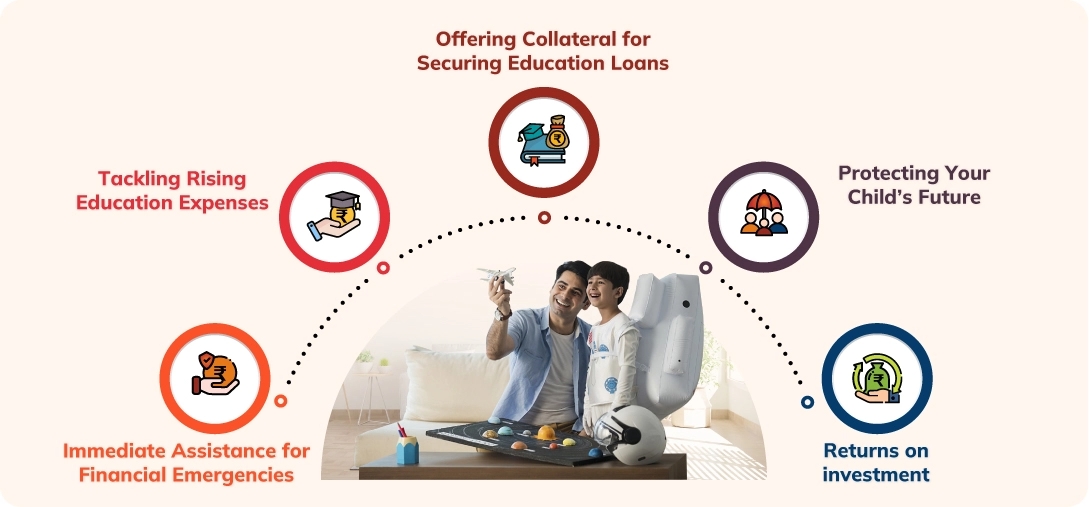
Immediate assistance for financial emergencies
Child education plans offer the benefit of immediate financial assistance in case of any financial emergency. Some child plans offer you the flexibility to withdraw money from the plan partially in times of your need. This feature of the plan is called Partial Withdrawal and is available after 5 years from purchasing the plan.
Tackling rising education expenses
Inflation increases the cost of goods and services over time. This could apply to education expenses as well. This is why planning and saving for your child’s education is important. The returns from your child education plan can help you beat inflation and stay prepared for your child’s education expenses. These returns can be used to cover the cost of tuition fees, books, travel, and other educational expenses.
Offering collateral for securing education loans
Child education plans can be used as a collateral when applying for education loans. The collateral can help you get a lower interest rate for the loan. You may also get a high-value loan if you have collateral in place.
Protecting your child’s future
Child education plans ensure that your child receives the education he/she desires with a lump sum payout at maturity or in case of an unfortunate event. It acts as a safety net to make sure that your child’s education does not get affected, no matter what!
Returns on investment
Child education plans offer the potential for high returns on investment. These plans may offer you the choice to invest your money in equity, debt or a mix of both funds. With a long-term investment horizon, these funds offer the opportunity for higher growth. This can help you meet your child’s future needs.
What are the key features and benefits of child education plans?
Lump-sum benefit
The plan provides your children with a lump-sum benefit in the case of your death within the policy term
Waiver of premium
Your child won’t be burdened with premium payments as the company pays it on your behalf. Thus, the policy continues to exist
Partial withdrawals
You can access your funds during the term in the form of partial withdrawals, subject to conditions. This takes care of your child’s different educational milestones
Tax benefits
Such a policy offers tax benefits to the policyholder under section 123 (read with Schedule XV, Sr. No. 1, 2 & 4 ) of the Income Tax Act^, 2025.
Loyalty addition and wealth booster
These plans may also offer benefits such as Loyalty Addition and Wealth Booster, to help you grow your money without you needing to invest extra money
Riders
Depending on your plan, you may add riders that can enhance your coverage from the plan. These riders offer added security and financial support for you and your child in difficult situations
Flexibility
These plans offer you the flexibility to choose your policy term, premium payment options and frequency of payouts to suit your requirements. You can choose a policy term that aligns with your child's educational needs. You can also customise the premium payment terms to suit your budget. Additionally, the plan provides flexibility to choose the frequency and mode of receiving the payouts.
Security for the future
Imagine your child dreaming of studying in a top-tier university abroad. A well-structured child insurance plan ensures that even if life throws unexpected challenges, those dreams remain intact. With this plan, you are not just saving for education—you are building a financial safety net for emergencies, like medical expenses or job loss. Whether it’s tuition or a life milestone like marriage, your investment ensures stability at every critical juncture.
In these uncertain times, knowing that your child will have the financial backup to pursue their aspirations provides peace of mind. This stability empowers parents to focus on other areas of life, knowing their child’s future is financially secure.
Protection against inflation
The cost of education in India rises by 11-12% annually1, meaning a course that costs ₹10 lakhs today could cost almost double by the time your child is ready to enrol. With a child insurance plan, your savings grow over time, helping you stay ahead of inflation. This ensures that your hard-earned money doesn’t lose its value, giving you the financial power to meet educational expenses without compromise.
By investing early, you can protect your savings from being eroded by rising costs, ensuring that your child receives the best education possible, even years down the line. Inflation won’t have the final say.
Regular saving
Saving consistently, even in small amounts, can lead to substantial wealth over time. Think of it like planting a tree: the earlier you start, the bigger it grows. For example, saving just ₹ 5,000 per month in a child insurance plan starting from your child’s birth can accumulate into a significant fund by the time they turn 18. This discipline not only builds wealth but also fosters healthy financial habits for the family.
With each premium payment, you are not just securing your child’s future—you are developing a culture of saving. This regular investment makes achieving long-term goals like higher education or international study easier without financial stress. Why wait? Start investing today—because every small contribution now means fewer financial worries later.
Potential to earn higher returns
A child insurance plan opens the door to investments that can yield higher returns than conventional savings methods. Through a mix of equity markets and debt instruments, your plan can align with your financial goals and risk appetite. For parents willing to embrace a bit of market volatility, the potential rewards are substantial if you handle the temporary risk.
Imagine your investment growing steadily, giving you the financial strength to fund your child’s ambitions—whether it is enrolling in a prestigious university or starting a new venture. These plans ensure that your savings not only stay safe but grow exponentially over time.
Life cover
A child education plan offers life cover! that ensures your child's financial needs are taken care of even if you are not around. These plans provide a financial safety net to support the child's goals.
COMP/DOC/Jan/2025/311/8287
What are the tax^ advantages of a child plan?
Below are some tax^ advantages of investing in a child plan:

Section 123 (read with Schedule XV, Sr. No. 1, 2 & 4 )
The premium that you pay towards a child insurance plan is eligible for a deduction of up to ₹ 1.5 lakh per annum under Section 123 (read with Schedule XV, Sr. No. 1, 2 & 4 )^ of The Income Tax Act, 2025.
Section 11 (read with Schedule II, Sr. No. 2)
The maturity benefits received under a child plan are exempt from tax under Section 11 (read with Schedule II, Sr. No. 2)^ of The Income Tax Act, 2025, subject to the prevailing tax laws.

How much should you invest in a child education plan?
Identify future goals
Your future goals can help you understand how much you need to invest in a child plan. For instance, if your child wishes to study abroad or pursue a professional course, it may cost more than studying in India and pursuing a general bachelor's degree. Your exact goals can help you determine a suitable investment amount.
Evaluate current savings
Your existing savings can influence how much more you need to invest. If you already have some money set aside, you may not need to invest as aggressively. Reviewing your current savings can give you a clearer picture of what to invest in to meet your financial goal.
Use a child plan calculator
A child plan calculator can give you a realistic estimate of how much you need to invest to achieve your goal. You may already have a goal in mind, which is the amount of money you want in the future to fulfil your child’s needs. The calculator can help you understand how much you need to invest to reach that goal. It can also help you understand the amount it would take to achieve it and the growth you can expect on your investment.
Account for inflation
Inflation is a key factor to keep in mind when deciding how much to invest for your child's future. Inflation will lower your purchasing power in the future. To stay ahead, you may need to invest a higher amount in a child insurance plan or choose options that offer growth potential to outpace inflation.
Decide the investment horizon
Your investment horizon can help you determine an investment. If you have a shorter horizon, you may need to invest more to reach your target amount. On the other hand, a longer horizon may allow you to grow your savings gradually.

COMP/DOC/Dec/2025/1012/1625
What are the top three benefits of child plans?
A child insurance plan offers three prime benefits:

Life Coverage

Premium Waiver

Maturity Benefit and Monthly Expenses
What are the different types of child plans?
Child ULIPs
Unit Linked Life Insurance Plan is an insurance policy that doubles up as an investment. A part of your money goes towards protecting your child just like the standard child education plan. The remaining part is invested in a mix of equity and debt.
Child savings plans
Child Saving Plan allows the policyholder to invest in the plan without any market risk. It is a multi-faceted plan that provides life cover, maturity benefits and tax benefits, all in one single policy.
Capital guarantee solutions
A capital guarantee solution is a child education plan that offers a guarantee on the invested amount. The initial invested amount is protected against market fluctuations, which lowers the risk on your investment.
Guaranteed return plan (Traditional plan)
A guaranteed return plan offers a guaranteed return on maturity, ensuring that your child’s future financial needs are met. These plans are low risk, making them one of the best child education plans.
What is life cover and why is it Important in child plans?
Life cover! is a financial safety net that provides a lump sum payment to your family in your absence during the policy term. Below are a few reasons to select the adequate life cover! for your child insurance plan.

Secure your child's financial future
Life cover! in a child plan ensures that your child receives a guaranteed payout in your absence. This safeguards their future by allowing them to continue their education and meet essential expenses without having to depend on other family members.

Peace of mind for you
You would be at peace knowing that your child will be financially supported if something happens to you. Child insurance plans offer guaranteed life cover! benefits, so you can rest easy knowing your child will have the means to manage their needs, even without your presence.

Cost-effectiveness
Child plans are affordable and allow you to plan for your child’s future without putting undue strain on your current budget.

Protects against life's uncertainties
Adequate life cover! offered by a child plan protects you and your loved ones against life's uncertainties. It gives you a financial safety net that you can rely on in your hour of need and ensures that the child's financial future remains secure.

Helps you build a corpus over time
With gradual investments, you can build your corpus over time and fulfil your child's future needs and goals like higher education, marriage and more.
How to choose the right child plan?
Below are some things that can help you select the best child education plan:
Multiple benefits:
Choose a plan that offers multiple benefits, like life cover, growth of savings and waiver of premium in case of an unfortunate event.
Partial withdrawal options:
Ensure the plan allows partial withdrawals to meet unexpected financial emergencies.
Reputation of the insurance provider:
You should look for an insurance provider that is reputed, trustworthy and will be able to provide financial security to your loved ones when needed.
Plan flexibility:
Choose a plan that offers flexibility in terms of premium payment as per your convenience and changing circumstances.
Investment options:
A plan should offer multiple investment options, like equity, debt and hybrid funds that align with your risk appetite and investment objectives.
Consider the policy term:
Make sure to select a policy tenure that matches your child’s age and future aspirations, such as college or higher education.
Check the claim settlement ratio:
Always check the claim settlement ratio of the insurance provider. A higher ratio means the company is more likely to pay claims.
Understand the risk profile:
Review the risk profile of the child insurance plan to ensure it matches your risk appetite and long-term financial goals.
Compare the costs and charges:
Look at the fees, charges and premium structures of different child plans. Comparing these will help you pick the most cost-effective option.
Tips to consider while buying a child plan
Here are a few tips you can consider while purchasing a plan for your child:



Start Early
Starting early provides you the benefit of growing your money over a long term. The interest earned over time gets re-invested to generate more returns. This is the advantage of the power of compounding. This provides you a larger amount that can be used to fulfil your child’s dreams.

Look for the Premium Waiver Benefit
Under this benefit, in case of an unfortunate event with the policyholder, all future premiums for the policy will be paid by the insurance company. This ensures that the policy continues and the dreams of the child are fulfilled, no matter what.

Look for the Partial Withdrawal+ Feature
Some plans offer the flexibility to withdraw upto a certain amount from the plan during the tenure of the policy. This feature helps you stay financially prepared for various milestones of your child, such as college admissions, wedding, and more. This also helps you stay prepared for any financial emergency.

Choose an Investment Fund as per your Needs
Some child plans provide you the option to choose from various funds$ – equity, debt, or a mix of both as per your risk appetite. Equity funds are high-risk funds that offer higher returns. Debt funds, on the other hand, offer stable returns. It is important that the child plan you choose provides you with options that suit your needs.
COMP/DOC/Nov/2021/211/6854
What are the advantages of early planning for your child's future plan?
Some advantages of planning for your child’s education early are:

Reduces financial stress
When you invest early, you can invest smaller amounts which reduces your financial burden. The additional money can help you save for your other financial goals.

More investment options
When you start early, your risk appetite tends to be higher. This opens up more investment opportunities, which have the potential to generate greater long-term returns and build wealth.

Build a larger corpus for higher education
Early investment allows more time for your money to grow and helps you build a substantial corpus for your child’s higher education. This gives your child the freedom to choose from a wider range of educational and career paths.

Better returns
Starting early provides more time for your money to grow and offer better returns on investment.

Flexibility in adjustments
Starting early allows you to make adjustments to your plan in response to market fluctuations or changing financial goals. You can rebalance your investments over time as needed and ensure your child’s financial needs are met.

Tax benefits
Investing early allows you to claim tax^ benefits underSection 123 (read with Schedule XV, Sr. No. 1, 2 & 4 ) of The Income Tax Act, 2025, for a longer period. This lowers your taxable income and increases your overall savings over time.

Teach responsibility
Early financial planning helps develop a sense of responsibility. It encourages parents to build good financial habits such as regular saving and investing. Over time, this disciplined approach ensures consistency and creates financial habits that help you achieve your long-term goals.

Secure success
A child education plan helps support the child's long-term financial success. It provides the child with the financial backing they need to pursue their education goals and other aspirations with confidence. Having this support can reduce financial stress and allow the child to focus on their ambitions.
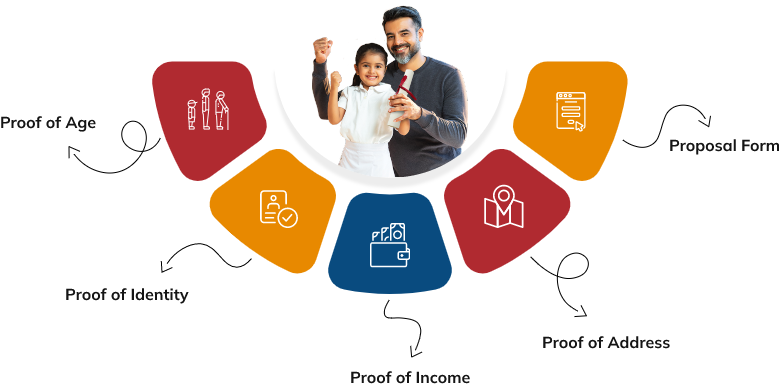
List of documents required for buying children insurance plans

What is the claim process for children insurance plans?
Below are the steps for claim process of a child insurance plan:
Notify the insurance company about the claim. Claim can be reported through any of our below mentioned touchpoints:

Visit the claims section of our website for online claim intimation

Call us at our 24 x 7 ClaimCare number –

E-mail us at
claimsupport@iciciprulife.com

SMS 'ICLAIMPolicy No' to 56767

Visit your nearest ICICI Prudential Life Insurance branch
However, your claim will only be considered for registeration upon submission of dully filled claim intimation form along with other requisite documents. Once all the requisite documents are received, the claim will be classified as intimated and the Turnaround time (TAT) for claim decisioning as mandated by the Insurance Regulation and Development Authority of India under Policyholders’ Interests (PPHI) Regulations 2017 will be calculated.
Fill out the claim form accurately and completely and submit the required documents for claim registration. Click here to know about the list of documents.
Our ClaimCare team then scrutinizes your claim details and guides you, individually, at every step of the way. The ClaimCare team will assess your claim, inform you in case any documents are pending and raise a requirement. Should you need any help, our claim experts will guide you and make sure that we are there to help whenever you need us.
The insurance company may appoint a surveyor to assess the claim. The surveyor will investigate the incident and verify the details provided
Once you have intimated us about your claim, and we receive all the relevant documents, we will decision your claim.
What documents are required for child insurance claim process?
Here is the list of mandatory documents that your nominee will require to file an insurance claim;
For death claim, click here
Frequently asked questions - Child Education Plans
What is child education plan?

A Child Education Plan is an insurance plan that helps you protect your savings and safeguard your child’s future. The plan provides you with options to invest your savings and then use them for your child’s education, in parts or one single withdrawal.
What is so special about child plan?
When should you buy a child education plan?
Can we choose add-ons or rider benefits while purchasing a child education plan?
What is child life coverage?
How to buy child insurance plan online?
What are high-growth potential child investment plans?
Can a child plan be purchased for a 10-year-old?
What is the tax* benefits of the child education plan in India?
Are child plans more secure than mutual funds?
How important is it to buy a child insurance plan?
What is the difference between a nominee and a beneficiary?
How much does it cost to insure a child?
Are child insurance plans safer than any other investment plan?
What is the best age to start a child plan?
COMP/DOC/Nov/2022/1111/1447